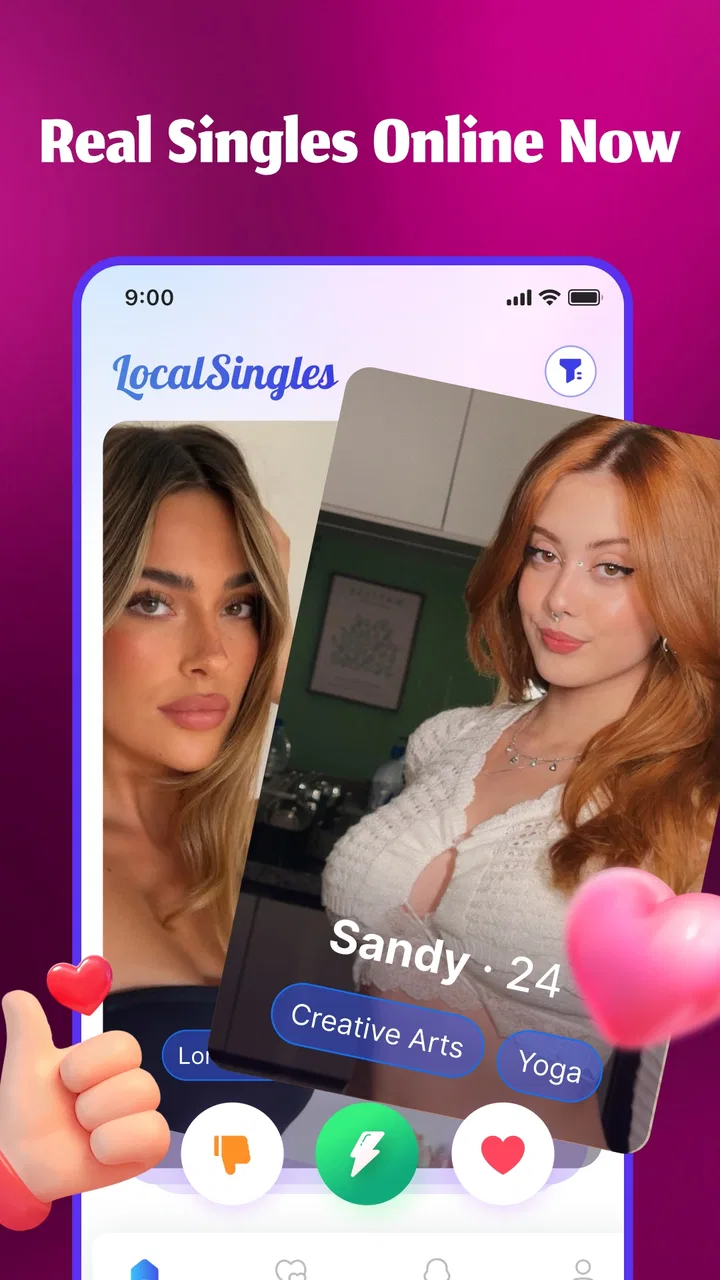
Sparkr: Meet & Chat & Dating
- 3.0
- Rating
- 50.00K
- Installs
- Free
- Price

 Analysis by App-foxy
When I try a new dating app, I pay attention to more than the promise of meeting someone. I want to know whether the screen is easy to understand, whether the conversation feels natural, and whether the app still makes sense when I am tired, distracted, or using it in a less-than-ideal setting. Sparkr is a free communication app from Pix Gamming built around meeting people and starting chats. Its basic idea is simple: create an opening for conversation and see whether a connection develops.
That simplicity is appealing, but it also means the experience depends heavily on how comfortable you are with quick social decisions. This is not an app I would describe as a complete replacement for every dating service. I see it more as a focused place for people who want to move from browsing into conversation without a complicated setup. The current version is 1.3.0, and it runs on Android 8.0 or later, which makes it usable on a wide range of older phones as well as newer devices.
The app is rated for mature users aged 17 and over. That matters because dating conversations can become personal quickly, and anyone using it should approach new contacts with the same care they would use on any online social platform. I found the concept easy to grasp, but the quality of the experience depends on how thoughtfully I used it rather than on the app doing all the work for me.
You May Also Like

 Blood Strike: 2.5 Anniversary
Blood Strike’s Loadouts Turn Every Drop Into a Tactical Gamble
A close look at Blood Strike’s custom loadouts: how fast access to signature weapons reshapes its battle royale rhythm, rewards preparation, and narrows the gap between fights.

 Pandora - Music & Podcasts
Pandora’s Music Is Easy to Start, but Harder to Recover
Pandora’s strength is its low-effort path from a seed to a station. Its weak spot is how much confidence it asks you to place in connection, setup, and quiet recovery.

 8 Ball Pool
 Is Built on Rivalries, Rematches, and Routine
A close look at the rivalries, rematches, shared routines, and unanswered safety questions that turn a quick pool match into a persistent mobile community.

 Samsung Music
’s Quiet Strength Is Playing What You Already Own
Its reach comes less from spectacle than from dependable access to a personal library. That simplicity is both the app’s strongest retention engine and its ceiling.

 AccuWeather: Weather Radar
AccuWeather Review: A Quick, Clear Forecast for Everyday Decisions
For everyday plans, the best forecast is the one you can understand quickly. AccuWeather makes rain timing, radar, and local conditions easy to act on, with a few trade-offs.

 Hill Climb Racing
Why Hill Climb Racing Still Turns Crashes Into One More Run
A tiny car, a bumpy hill and one more upgrade: Hill Climb Racing keeps resurfacing because its simple chaos makes every near-miss feel personal.
More From Our News Desk
View All News


How Sparkr feels to read and navigate
I find that Sparkr’s reading and navigation experience is easiest to judge by whether I can stay focused on a conversation without turning a quick check into a long session. A useful habit is to decide what I want from each visit—reply to one person, or see whether anyone new seems worth talking to—then close the app once that is done. That gives me a clearer sense of whether its simplicity supports a routine I can actually maintain.
A straightforward starting point
The strongest accessibility quality I noticed is conceptual rather than technical. Sparkr presents itself as a place to meet, chat, and explore possible dating connections, so I did not have to learn an elaborate system before understanding what I was supposed to do. For someone who dislikes crowded menus or apps that bury their main purpose under extra tools, that directness can be useful.
I prefer this kind of focused layout when I am deciding whether to continue with an app. A communication app should make the route from opening the service to beginning a conversation feel obvious. Sparkr’s identity is built around that route, and the short name and compact purpose help keep the idea memorable. It is easier to approach than a platform that mixes dating with a long list of unrelated social activities.
There is a trade-off, though. A focused dating app can feel less forgiving if you need more explanation before acting. People who process information slowly, have difficulty interpreting unfamiliar icons, or prefer detailed guidance may want to take their time instead of tapping through quickly. I would not treat speed as proof that the app is easy for everyone. A clean concept helps, but readable labels, sensible contrast, and predictable controls still matter in daily use.
Reading conversations without rushing
Chat-based communication can be more comfortable than live conversation for many people because it allows time to think. I can reread a message, decide how much personal information to share, and answer when I am ready. That makes this type of app potentially useful for someone who finds face-to-face introductions stressful or who communicates better in writing.
My practical advice is to treat the first exchange as a screening stage, not as a commitment. Keep the opening message simple, avoid sharing sensitive details, and notice whether the other person respects the pace of the conversation. This is especially important for users who find social pressure difficult. The ability to pause is one of the quiet advantages of chat, but it only helps if I allow myself to use that pause.
People with reading-related difficulties may also benefit from writing short messages rather than trying to follow a fast, complicated exchange. I would keep notifications manageable and read conversations when the surroundings are calm. If a chat becomes dense, summarizing the key point before replying can reduce the mental load. That is not a special feature of Sparkr; it is a sensible workflow for getting more control from a text-first dating experience.
Where the app may feel less clear
The public rating sits at 3.0 from around 375 ratings, with roughly 233 written reviews. I read that as a sign to keep expectations measured. It does not tell me that every person will have the same experience, but it does suggest that the app is not universally satisfying. A dating service can be difficult to judge from its idea alone because the usefulness of conversations depends on the people available in a user’s area and on how actively they participate.
There are also around 50,000 installs, so I would not assume the same breadth of potential contacts as I might find on a much larger, established dating platform. That can be a benefit if I prefer a less overwhelming environment, but it can become a limitation if I live outside a busy area or want a very specific type of connection. Before investing much time, I would check whether the local pool feels active enough for my needs.
Motor and sensory considerations during use
Dating apps ask for repeated small actions: tapping through profiles or screens, typing messages, scrolling, and making decisions. For users with limited dexterity, hand tremors, repetitive strain, or fatigue, that pattern can become tiring even when each individual action seems simple. I would use Sparkr in short sessions, rest between conversations, and avoid trying to manage several chats while walking or doing another task.
A useful approach is to prepare a few neutral opening ideas in a notes app and adapt them rather than typing from scratch every time. This reduces repeated keyboard work and can make the first step less demanding. I would still personalize each message; copying the same line to everyone can make conversations feel careless and may lead to poor matches. The goal is to reduce physical effort without removing genuine attention.
For users who are sensitive to bright screens, late-night use may be uncomfortable. I would lower the phone’s brightness, use the device’s own display settings, and avoid long sessions in a dark room. Those adjustments come from the phone rather than from a confirmed Sparkr accessibility mode, so I would not assume the app itself offers specialized visual controls. The same caution applies to text size: enlarging system text may help in some apps, but it is worth checking whether the layout remains comfortable before relying on it.
People with hearing loss may find written chat more practical than dating services that depend heavily on calls or audio introductions. On the other hand, a text conversation can still contain ambiguity. Sarcasm, short replies, and delayed answers are easy to misread, particularly when I cannot see facial expression or hear tone. I found it better to ask a direct, polite question than to guess what a brief message meant.
Users with visual impairments should consider how well the app works with their personal screen reader, magnification, and contrast settings before making it their main dating tool. I cannot responsibly promise that every element will be announced or resized perfectly. The sensible test is practical: can you identify the main controls, read incoming messages, and move back without losing your place? If those basics are unreliable on your device, another service with more familiar accessibility support may be a better choice.
Using Sparkr in real situations
One realistic scenario is a person commuting home who wants to answer a promising message but is surrounded by noise and movement. I would not try to compose an important reply on a crowded bus or while crossing a street. Instead, I would read only enough to decide whether the message needs an immediate response, then return to it in a quieter place. This small habit protects attention and prevents a dating app from competing with safety.
Another situation is someone with limited free time who wants to meet people without spending an entire evening browsing. Sparkr’s narrow communication focus may suit a ten-minute routine: open the app, review the conversations that matter, send one thoughtful reply, and close it. That approach is more sustainable than swiping or checking constantly. It also makes it easier to notice whether an interaction is genuinely developing instead of measuring success by screen time.
For someone who lives with fluctuating energy, I would separate discovery from conversation. Use a higher-energy moment to look through possible connections, then save actual replies for a time when concentration is better. If the app makes you feel pressured to respond immediately, remember that a respectful connection should tolerate a reasonable delay. A slower pace can be an advantage for people who need more time to formulate messages.
Users in shared homes should also think about privacy in ordinary situations. A notification appearing on a lock screen can reveal more than intended, especially if family members, roommates, or support workers can see the phone. I would review the phone’s notification display and avoid opening personal chats in public spaces. This is a practical part of inclusive access: privacy is harder to maintain when someone relies on a shared device or receives help with phone tasks.
What it is like compared with familiar alternatives
Compared with a large general dating platform, Sparkr may feel less intimidating because its purpose is easier to describe. Someone who dislikes a crowded ecosystem may appreciate a smaller, more direct communication experience. The downside is reach. A smaller service may offer fewer nearby conversations, fewer niche preferences, or less momentum than a widely used alternative.
Compared with ordinary messaging apps, Sparkr is more suitable for meeting people who are open to dating rather than contacting friends and family. That focus saves time, but it also raises the need for boundaries. A regular messenger usually starts with people I already know; a dating app begins with uncertainty. I would never use the familiarity of a chat screen as a reason to trust a stranger quickly.
Compared with a platform that provides extensive profile filters, verification tools, or mature safety controls, Sparkr may not be the best option for users who want a highly managed search process. I would choose a more established service if I needed a large local community, detailed compatibility settings, or a long history of safety features. Sparkr is more convincing when the priority is simply opening a conversation and seeing whether it develops.
Costs, expectations, and personal boundaries
The app is free to download and use at its basic price point, but in-app purchases range from $2.49 to $59.99 per item. I would treat that range as a reason to review each purchase screen carefully rather than assuming every useful action is included. Before paying, decide what problem the purchase is meant to solve and whether it changes the experience enough to justify the cost.
My best rule is to use the free experience long enough to understand the app’s local activity and conversation quality. If there are few suitable people or the interface already creates friction, spending more will not fix the central problem. Purchases can make sense only when the underlying service is already useful to you and the benefit is clear.
The mature age rating also calls for a realistic approach to safety. Do not send money, share account credentials, disclose your home address, or agree to a private meeting without sensible precautions. If you meet someone, choose a public place, tell a trusted person where you will be, and arrange your own way home. These steps are not signs of suspicion; they are normal safeguards when meeting a person first encountered online.
Remaining barriers that affect inclusion
The biggest barrier is not necessarily a button or menu. It is the social uncertainty built into dating. A person with anxiety, communication differences, or previous negative experiences may find the open-ended nature of chat exhausting. Sparkr can provide an entry point, but it cannot guarantee considerate matches, clear intentions, or an emotionally comfortable exchange.
Another barrier is dependence on the phone environment. Small screens, glare, poor connectivity, low battery, and noisy surroundings can all make a short conversation harder. Someone who needs assistive technology should test the app during the conditions in which they actually plan to use it, not only at a desk with perfect lighting. If navigation becomes difficult when the phone is enlarged or operated with an alternative input method, that limitation matters more than the app’s attractive premise.
Language and cultural expectations can create additional friction. A short profile or message may be interpreted differently by people with different communication styles. I would be explicit about what I am looking for and avoid treating a delayed reply as an automatic rejection. Clear wording benefits almost everyone, especially users who find hints and implied meanings difficult to decode.
I also would not recommend making Sparkr the only way to build a social life. It is better used as one channel among others, particularly for people who need dependable support, structured introductions, or a community built around a shared interest. A friend, dating coach, or trusted support person can help review safety decisions, but they should not take control of private conversations without the user’s consent.
My inclusive verdict
After looking at Sparkr through the lens of different abilities and everyday contexts, I see a free communication app with an approachable central idea and a few important limits. Its strongest use case is someone who wants a direct route into dating conversation, prefers written interaction, and is comfortable judging matches carefully. It can also suit people who need time to think before replying, provided they control the pace instead of allowing notifications or social pressure to dictate it.
I would be more cautious about recommending it to someone who needs proven screen-reader compatibility, extensive visual customization, a large local dating pool, or highly structured safety and matching tools. The moderate average rating and relatively modest reach make it sensible to test rather than commit immediately. The purchase range is another reason to keep spending deliberate.
My recommendation is to try Sparkr slowly, privately, and with clear boundaries. Use short sessions, adjust the phone for comfort, protect notification privacy, and evaluate the quality of actual conversations rather than the excitement of opening the app. Pix Gamming has kept the premise easy to understand, but an inclusive dating experience depends on more than a simple premise. If the app fits your reading, motor, sensory, and social needs, it may be a pleasant way to start meeting people. If you need deeper accessibility controls or a broader community, a more established alternative will probably serve you better.
FAQs for Sparkr: Meet & Chat & Dating
01What is Sparkr: Meet & Chat & Dating, and how does it work?
Sparkr is a social dating app designed to help people discover new connections, start conversations, and potentially meet compatible partners. After creating a profile, users can usually add photos and personal details, browse or interact with other profiles, and use in-app chat features. The exact experience may vary depending on location, account settings, and the features currently available in the app.
02Is Sparkr: Meet & Chat & Dating free to download and use?
Sparkr can generally be downloaded without an upfront charge, but some features may require payment or a subscription. Dating apps commonly place advanced discovery tools, increased visibility, unlimited messaging, or other extras behind premium plans or optional purchases. Before subscribing, review the pricing, renewal terms, trial conditions, and cancellation instructions shown in the app store or inside Sparkr.
03Is Sparkr safe for meeting and chatting with other people?
Sparkr may include standard tools such as profile reporting, blocking, and moderation, but no dating platform can guarantee that every profile is genuine or trustworthy. Avoid sharing your home address, financial information, passwords, or private documents. Keep early conversations inside the app, be cautious of urgent requests for money, and arrange first meetings in a busy public place while informing someone you trust.
04What information does Sparkr require when creating an account?
The registration process may request details such as an email address, phone number, date of birth, profile photos, location, and information about your interests or preferences. Some permissions may support matching, notifications, or communication features. Check the privacy policy and your device permission settings before proceeding, and provide only information you are comfortable displaying or sharing with other users.
05Can I delete my Sparkr account and cancel a subscription?
You should be able to manage your profile and request account deletion through the app or its support channels, although the exact steps can depend on the current version. Deleting the app does not automatically cancel an active subscription. If you purchased a plan through Google Play or the Apple App Store, cancel it in the relevant store’s subscription settings and check for confirmation before removing your account.
Pros
- Simple interface makes browsing profiles quick and easy.
- Multiple ways to connect support different dating preferences.
- Chat features encourage conversations beyond simple profile matching.
- Useful discovery tools help find people with similar interests.
- Suitable for users seeking both casual chats and potential relationships.
Cons
- Some features may require a paid subscription or in-app purchases.
- The quality of matches can vary depending on your location.
- New users may receive unwanted messages or low-effort introductions.
- Profile information may be limited unless users complete it carefully.
- Privacy settings should be reviewed before sharing personal details.

Sparkr: Meet & Chat & Dating
Gallery